Why Friends Love Gathering at a Bar With Private Room
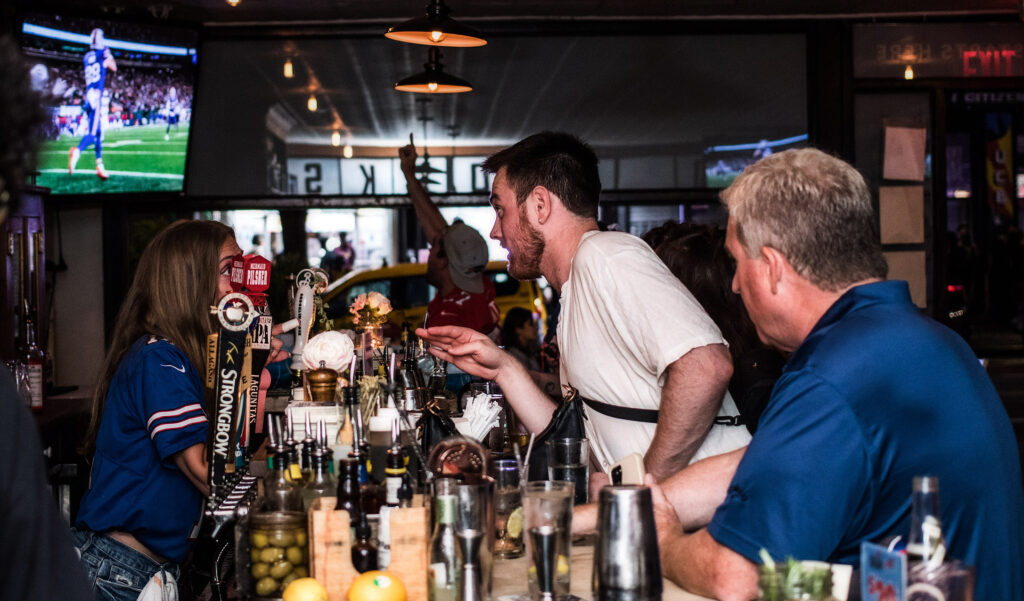
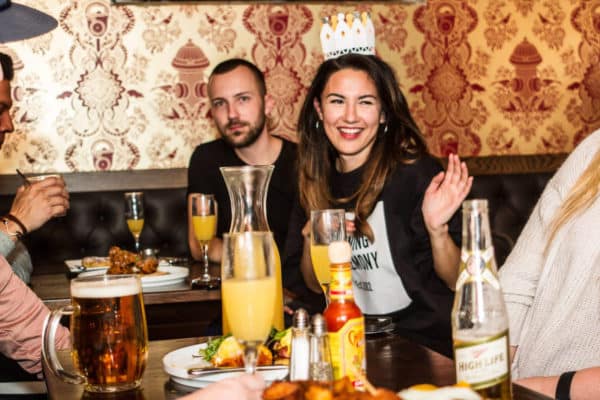
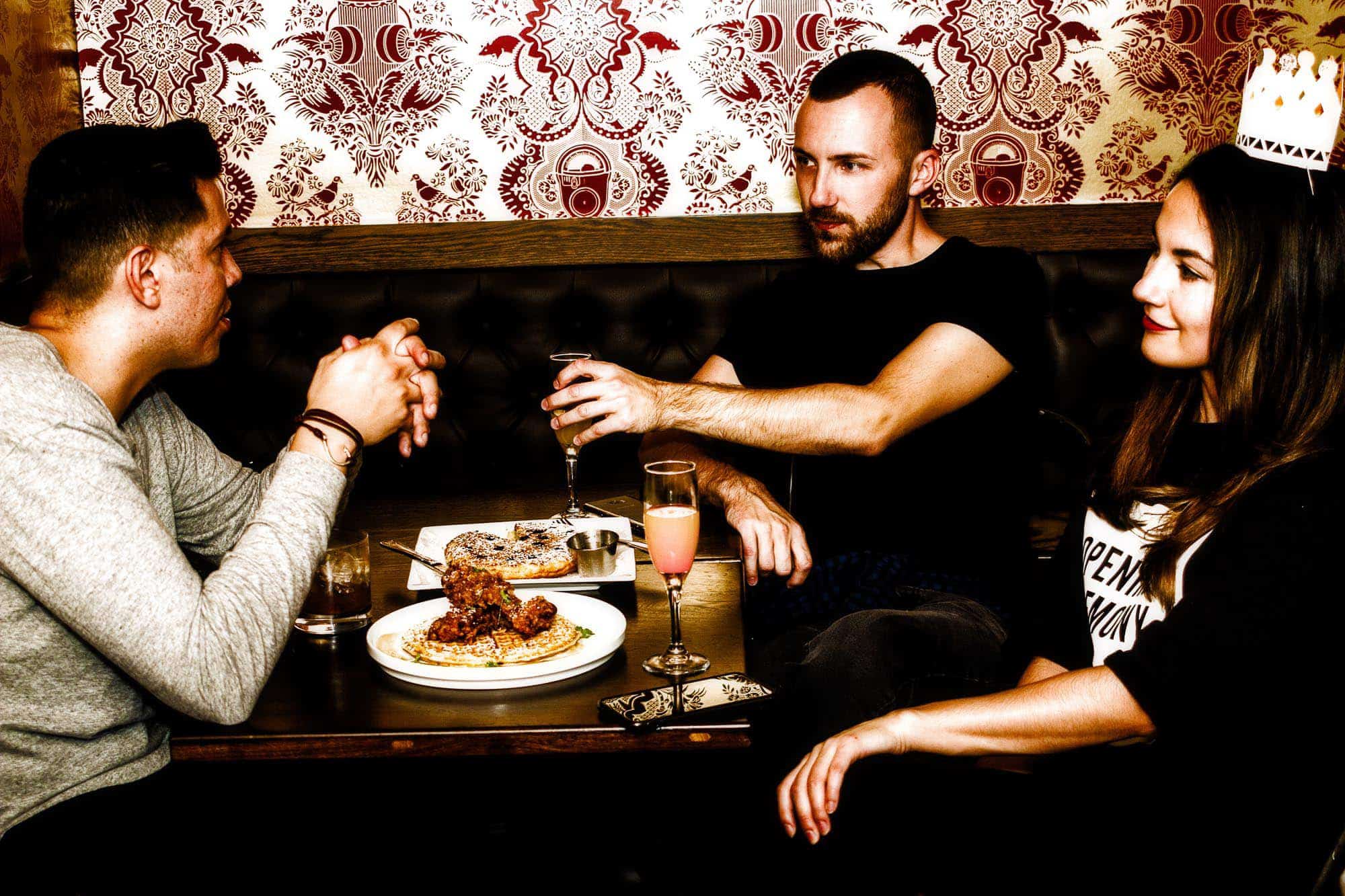
There is a noticeable difference between meeting friends at a regular bar and settling into a bar with private room access. The drinks may be similar. The menu may even be identical. Yet the mood changes the moment a group has its own space. Voices relax. People stay longer. Conversations deepen. The night develops a shape of its own instead of being pulled apart by noise, foot traffic, and the awkward logistics of trying to hold a group together in a crowded public area.
Anyone who has organized birthdays, reunion drinks, engagement toasts, post work celebrations, or low key catchups knows this from experience. A standard bar can work for two or three people. Once a gathering grows past that, the cracks start to show. Somebody arrives late and cannot find the group. Half the table cannot hear the other half. Coats end up piled on spare chairs. One loud neighboring party changes the entire energy of the evening. What was meant to https://andydmku370.lumenforgex.com/posts/how-to-host-a-business-mixer-at-a-bar-with-private-room feel easy starts to feel managed.
A private room solves more of these problems than most people expect. It is not only about privacy. It is about comfort, flow, and social chemistry. Friends love gathering in these spaces because they create a setting that feels both special and effortless, which is a rare combination.
The sweet spot between going out and staying in
People often compare a private room at a bar to hosting at home, and the comparison makes sense. Home gives you intimacy and control. A bar gives you service, atmosphere, and no cleanup. A bar with private room access sits right in the middle. It offers the warmth of a personal gathering without the work of planning everything yourself.
That middle ground matters more than it sounds. Hosting at home can be generous, but it comes with hidden labor. Someone shops for food. Someone chills drinks. Someone wipes the kitchen counters before guests arrive and again after they leave. Even casual entertaining asks a lot of the host. Many people still do it, of course, but they are aware that the role changes the evening. The host rarely gets to be fully present.
At a private room in a bar, that burden lifts. Friends can arrive, order, settle in, and enjoy one another without needing to monitor the thermostat, wash extra glasses, or wonder whether the downstairs neighbor is getting irritated by the noise. That freedom often makes people more willing to gather in the first place.
I have seen groups postpone a get together for weeks while debating whose apartment could fit everyone, who lives closest to public transit, and whether it is worth the effort to host. The same group will commit quickly when someone suggests a venue with a reservable private space. The decision becomes simpler. People know what to expect, and expectation is half of good event planning.
Conversation actually works there
One of the least glamorous but most important reasons friends prefer private rooms is acoustics. Bars are built for energy. That energy can be fun, but it also creates friction. Music competes with conversation. Other groups compete with your group. Staff moving through the room, sports on screens, glassware clinking, and doors opening every few minutes all add up.
In a private room, people can hear each other. That sounds obvious, but it transforms the night. Instead of splitting into tiny side conversations because only the nearest two seats are audible, the group can function as a group. Stories land. Toasts are heard. Jokes build on each other. The shy friend who gets talked over in an open bar suddenly has room to speak.
This becomes especially valuable when the gathering mixes different circles. Think about a birthday party where college friends, work friends, siblings, and a partner’s friends all show up. In a noisy open setting, people stick to who they know. In a private room, the environment encourages cross talk. Introductions feel less transactional and more natural. That is often the difference between an event that feels fragmented and one that feels memorable.
There is also a practical side. When people do not need to shout all night, they stay more comfortable. Their voices hold up. Their stress level stays lower. The gathering feels longer in a good way, not in a draining way.
It feels like an occasion without becoming formal
Friends often want something that feels a little elevated, but not stiff. That balance can be hard to find. A restaurant private dining room can tip too formal for a casual birthday. A living room may feel too ordinary for a milestone event. The private room at a bar hits an appealing note in between. It says, this matters, but it does not say, dress code and assigned seating required.
That sense of occasion comes from simple things. A defined room creates a threshold. People enter and feel that they have arrived somewhere intended for the group. The drinks are made by professionals. Food appears on time. Lighting is usually more flattering than what most people have at home. Even a modest room can feel festive once everyone is inside it.
What friends respond to is not luxury alone. It is intention. A reserved space tells guests that somebody cared enough to choose a setting where the evening could unfold smoothly. That gesture goes a long way, even if the event itself is casual. A room with a sofa, a few cocktail tables, and a dedicated server can feel more thoughtful than a much pricier setup that lacks comfort.
Privacy changes behavior in subtle, positive ways
People behave differently when they know they have a little distance from the main room. They loosen up. They take more photos. They bring up stories they would not tell at full volume near strangers. They sing happy birthday without embarrassment. If the group includes older relatives, coworkers, or newer acquaintances, privacy helps everyone calibrate more easily.
This matters for celebrations that involve speeches, games, or a surprise element. In an open bar, these moments can feel exposed. In a private room, they feel contained and natural. You are not performing for the entire venue. You are sharing something with your own people.
There is a practical side to privacy, too. Gifts, bags, jackets, and decorations can stay in one place. If someone needs a quieter moment, perhaps a parent checking in with a babysitter or a friend taking a breather, they can do that without disappearing into the hallway or bathroom. Good spaces support the rhythm of real social life, which includes small pauses as much as big laughs.
Privacy does not mean isolation, and that is part of the appeal. Friends still get the energy of being out in a bar, hearing the buzz beyond the door and knowing the city is moving around them. They simply have the option to step in and out of the spotlight.
Group logistics become dramatically easier
Ask anyone who has tried to gather eight to fifteen friends at a walk in venue on a Friday night. The challenge is not only getting a table. It is managing uncertainty. Will there be enough seats? Can the bar split the check? Is there room for late arrivals? Can dietary restrictions be accommodated? What happens if the group expands by three people at the last minute?
A private room does not eliminate every variable, but it narrows them. Capacity is set. Staff know a group is coming. Food and beverage minimums, if there are any, are stated upfront. The room often comes with a reservation window that gives the evening structure without making it rigid.
That structure is useful because friend groups rarely move with military precision. People run late. Someone brings a plus one. Another person leaves early for an early morning flight. In a standard bar setup, each of those changes can ripple through the whole evening. In a private room, the group has enough space and enough autonomy to absorb those changes.
This is one reason private rooms are especially popular for milestone birthdays and reunion style gatherings. Those events tend to attract a mixed attendance pattern. Some guests want to stay all night. Others can only drop in for an hour. A private room accommodates both without making the event feel unstable.
The room gives the night a center of gravity
Social events need a focal point. Without one, people drift. In a public bar, the group can scatter physically and emotionally. Some line up at the bar. Some stand near the entrance. Some claim stools in a corner. The gathering becomes less of a shared experience and more of a loose overlap.
A private room acts as a home base. Guests always know where to return after getting a drink or taking a call. New arrivals know exactly where to go. If the venue has multiple levels or crowded weekend traffic, this saves a surprising amount of hassle.
That center of gravity has emotional benefits, too. It gives the event coherence. The host can greet people properly. Friends who have not seen each other in years can reconnect without scanning the room every few minutes. Group photos happen before people wander off. If there is a cake, a toast, or a playlist, it has a place to live.
A lot of event success comes down to reducing small frictions. When enough small frictions disappear, the evening starts to feel seamless. Guests may not articulate why it worked so well. They simply leave saying, that was fun, we should do that again.
Better for mixed personalities and mixed ages
Not every friend group is made up of extroverts in their twenties looking for a loud night out. Most groups are more varied than that. One friend wants to dance later. Another wants a seat and a good old fashioned. Somebody’s cousin is visiting from out of town. Somebody’s older sister came straight from work. A couple in the group has a babysitter and a hard stop. The ideal setting has to flex.
A bar with private room options does that better than many people realize. It can support a high energy celebration while still giving quieter guests a place to relax. The group can shape the room around its own style. Some turn it into a lively cocktail space with music and standing conversation. Others keep it intimate, with shared appetizers and slower paced catching up.
This flexibility is part of why private rooms work so well for multigenerational gatherings. Parents, adult children, and family friends can all enjoy the same event without competing for comfort. Grandparents who would struggle in the main bar may feel perfectly at ease in a quieter enclosed room. Younger guests still get the feeling of being out somewhere festive.
Money feels clearer, which lowers tension
Money can derail social events faster than most hosts expect. Not because friends are stingy, but because ambiguity creates discomfort. In a public bar, there can be confusion over tabs, rounds, shared plates, and whether the group is expected to keep buying in order to hold the space. No one wants to be the person chasing payments or asking staff to recalculate a chaotic bill.
Private room bookings usually come with clearer terms. Sometimes there is a minimum spend. Sometimes there is a room fee. Sometimes packages are available. Whatever the setup, there is usually more clarity before the first drink is poured. That helps hosts make sound decisions and helps guests understand the tone of the evening.
From experience, the best gatherings are not always the ones with the largest budgets. They are the ones where financial expectations were handled early and simply. If the group plans to order a few platters and let people buy their own drinks, say so. If the host is covering the first round or the whole night, that can be arranged more cleanly in a private room than in a packed bar.
Here are a few reasons that financial clarity matters so much:
- Guests relax when they know the plan.
- Hosts avoid awkward end of night negotiations.
- Staff can serve the group more efficiently.
- Minimum spends often work well for medium sized groups who would order that amount anyway.
- Surprises, especially on the final bill, rarely improve anyone’s memory of the night.
The service tends to be more focused
A good private room experience depends heavily on staff. When the venue handles it well, service becomes one of the strongest reasons people love the setup. Instead of fighting for attention at a crowded bar, guests often get a more organized flow of drinks and food. Orders are easier to place. Empty glasses get noticed sooner. The host spends less time acting as an intermediary.
This does not mean every private room comes with luxury treatment. It means the service model is usually more deliberate. The venue expects a group and staffs accordingly. Even a single dedicated server checking in at sensible intervals can improve the pace of the evening. Guests stay in the room. Conversations continue. Nobody misses the punchline because they were twenty minutes deep in a line at the bar.
Service quality is also where venue choice becomes critical. Not every private room is equal. Some are beautiful but detached, making guests feel forgotten. Others are too exposed, so the room offers little real separation from the main floor. The best ones strike a balance between privacy and accessibility. The room feels distinct, but ordering a drink does not become a project.
It gives people permission to stay longer
There is an unspoken time pressure in many bars. If the place is crowded, guests feel the need to guard seats, reorder quickly, or move along. None of that supports a relaxed social evening. A private room changes the tempo. Because the space is reserved, people can settle in without feeling that they are occupying borrowed ground.
That permission to stay longer often leads to better nights. The first hour of any group gathering is usually transitional. People arrive at different times, shed coats, order drinks, and catch up on basic life updates. The more meaningful, more entertaining part often starts later, once everyone has arrived and the group has found its rhythm. A private room protects that arc.
I have watched ordinary meetups turn unexpectedly memorable for this exact reason. A room booked for a birthday dinner becomes the place where old friends stay for another round, then another hour, then a spontaneous toast to a recent promotion, then stories nobody had told in years. The environment allowed the night to breathe. That is not a small thing.
Small custom touches become possible
Another reason friends gravitate toward private rooms is that they allow for personalization without requiring a full scale event budget. A cake can be brought in if the venue permits it. A playlist might be arranged. Decorations can be minimal but effective because they are concentrated in one room instead of disappearing into a larger venue. Even something as simple as a reserved sign and a cluster of candles can make guests feel welcomed.
This is especially valuable for celebrations that matter emotionally more than ceremonially. Not every birthday needs a banquet hall. Not every engagement toast needs a private estate. Sometimes what people want is a room that feels like theirs for a few hours, paired with good drinks, easy service, and enough atmosphere to make the night feel distinct from a regular Wednesday.
When those touches are done with restraint, they work beautifully. Most groups do not need balloon arches and elaborate favors. They need a thoughtful setting, a little privacy, and a venue that understands the point is connection.
When a private room may not be the right fit
Private rooms are not perfect for every occasion, and that is worth saying plainly. Very small groups may prefer the spontaneity of sitting at the bar. People who want to mingle widely with the whole venue may find a separate room too contained. Some rooms come with spending minimums that make sense only if the group size justifies them. Others feel too corporate if the decor is sterile or the room lacks natural energy.
That is why the best hosts ask a few practical questions before booking:
- Does the room size match the group, neither cramped nor cavernous?
- Is there easy access to restrooms, the bar, and staff?
- What are the food and beverage minimums, and are they realistic?
- How much privacy does the room actually provide?
- Will the atmosphere suit the personality of the group?
These are not glamorous details, but they determine whether the room enhances the gathering or merely formalizes it.
Why the memory tends to be better
People rarely remember social events in terms of logistics. They remember how the evening felt. Still, logistics shape feeling more than most realize. When friends gather in a well chosen private room, the practical details support the emotional experience instead of interrupting it. Guests can hear one another. The host is less stressed. The group has a shared base. The celebration feels intentional without becoming stiff.
That combination creates stronger memories. Not because a private room is inherently luxurious, but because it removes enough friction for the real point of the evening to come forward. Friends can laugh without shouting. They can toast without apology. They can stay long enough for the night to become something more than a quick drink.
A bar with private room access succeeds when it gives people the pleasures of going out and the comfort of gathering in. That is why friends keep choosing it for birthdays, reunions, farewell drinks, small holiday parties, and all the in between reasons people look for one another at the end of a long week. The room does not create the connection. It simply makes space for it, and often that is exactly what people have been looking for.
The Winslow
Address: 243 E 14th St, New York, NY 10003
Phone number: +12127777717
FAQ About Bar With Private Room
Which bars in NYC offer private rooms?
Many bars in New York City offer private and semi-private rooms for parties and events, ranging from hidden basement speakeasies to upscale lounge spaces. Top options include The Back Room on the Lower East Side, Dear Irving Gramercy, Pebble Bar in Midtown, Mister Paradise in the East Village, and The Winslow in the East Village.
What is a private room in a pub called?
A small, private seating area or partitioned booth in a traditional pub is most commonly called a snug. Larger private rooms used for events, parties, or dining are typically referred to as private dining rooms, function rooms, or back rooms.
How much does a 2 hour open bar cost?
A 2-hour open bar generally costs between $15 and $45 per person, depending heavily on the quality of alcohol you choose. For a standard group of 100 guests, this translates to an overall cost of $1,500 to $4,500 before taxes, setups, and staff gratuities.