Drunken Noodle Near Me: Where to Find Big Flavor Fast
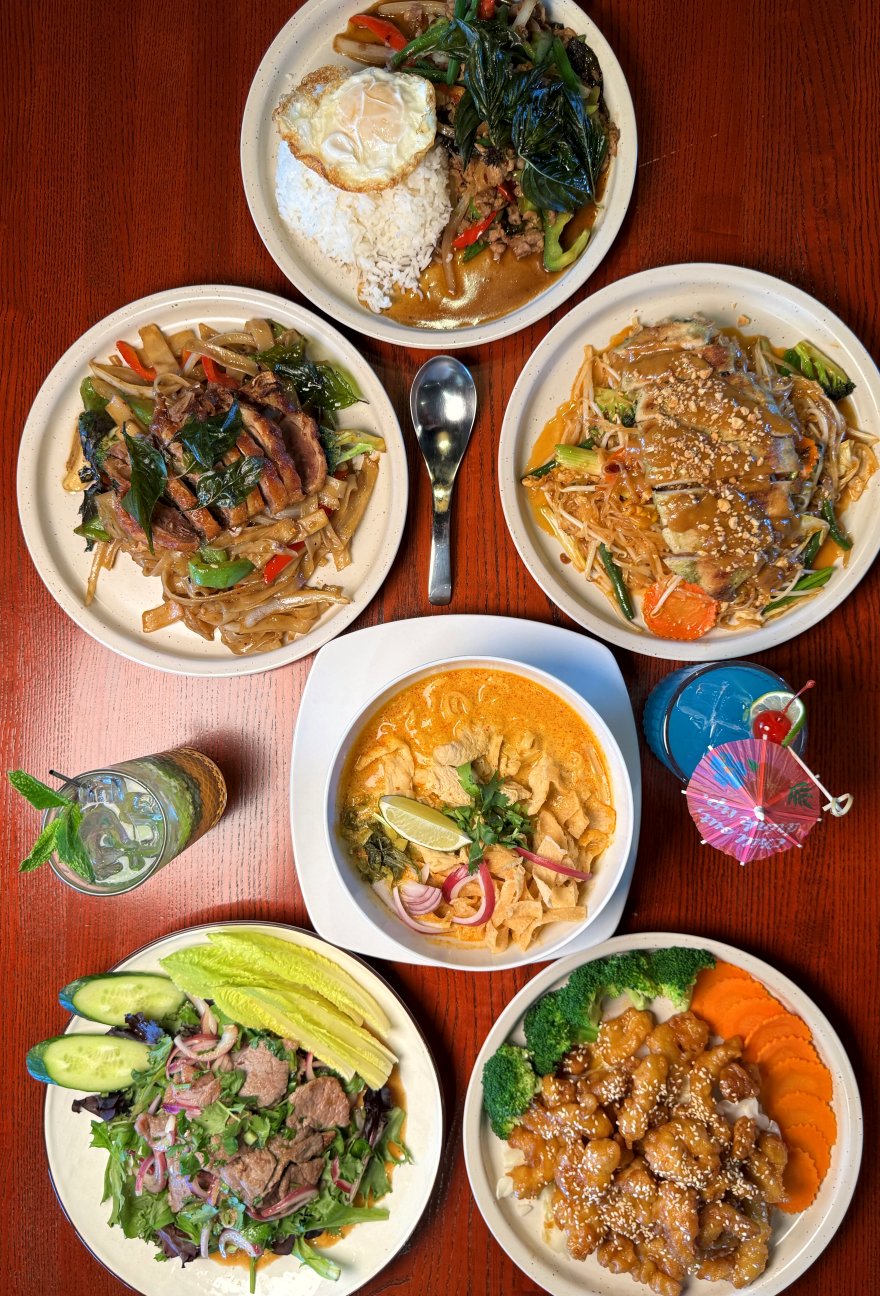
The search for Drunken Noodles Near Me usually starts the same way: it is late, you are hungry, and plain takeout will not cut it. You want something hot, savory, a little sweet, a little smoky, and strong enough to feel like a real meal rather than a snack in a cardboard box. Few dishes deliver that payoff as quickly as a good Drunken Noodle.
When it is done right, this Thai stir-fried noodle dish lands with immediate impact. Wide rice noodles soak up sauce without turning heavy. Thai basil adds that unmistakable peppery perfume. Chili brings heat that builds instead of bludgeoning. Protein, whether chicken, beef, tofu, or shrimp, gives the bowl some substance. The result is bold, fast comfort food with enough complexity to feel worth seeking out.
That last part matters. Not every restaurant that lists drunken noodles makes them well. Some versions lean too sweet. Others arrive oily and flat, with mushy noodles and no basil aroma left at all. If you are typing “drunken noodles near me” into your phone, you are not just looking for the nearest option. You are looking https://ericksjbv024.publishlane.com/posts/drunken-noodles-near-me-why-this-thai-classic-is-so-popular for the right option, the place that understands why people keep ordering this dish again and again.
What makes drunken noodle worth the trip
Drunken noodle, often associated with pad kee mao, is one of those dishes that lives or dies on balance. It should taste assertive, but not chaotic. You want chew from the noodles, char from a hot wok, freshness from basil, and enough sauce to coat everything without leaving a puddle at the bottom of the container.
The flavor profile sits in a useful middle ground. Pad Thai can be too sweet for some people. Pad see ew is often gentler and less spicy. Drunken noodle usually pushes harder, especially if the kitchen respects the chili. That makes it a favorite for diners who want a fast meal with some attitude.
The dish also travels surprisingly well, at least when the restaurant cooks it with restraint. Wide rice noodles hold heat nicely, and the sauce clings instead of separating. That is one reason it shows up so often in searches for quick takeout. Another is that it fits different appetites. One person may want tofu and vegetables with medium spice. Another may want beef, extra basil, and enough chili to clear the sinuses. The framework is flexible, and good restaurants know how to adjust without breaking the dish.
Why some local versions disappoint
A disappointing drunken noodle usually fails in one of three places: the noodles, the wok, or the seasoning.
Noodles should be tender but resilient. Fresh rice noodles can be tricky. If they sit too long or get handled roughly, they clump, tear, or turn gummy. In a rushed kitchen, especially during peak delivery hours, that happens more often than customers realize. You can taste the difference immediately. Instead of glossy ribbons with bite, you get dense strips that swallow sauce unevenly.
Then there is wok heat. Proper stir-frying leaves behind a faint smoky edge, the kind of flavor that tells you the pan was hot enough and the cook moved fast. Without that heat, drunken noodle tastes like sauced noodles mixed in a skillet. It may still be edible, but it loses the intensity that gives the dish its identity.
Seasoning is where judgment matters most. A lot of places oversimplify it. They add sweetness to make it crowd-pleasing, then back off the chili, then forget the basil is not just decoration. The result is a generic stir-fry labeled as drunken noodle. If you have had a strong version before, you know how flat that can feel.
How to tell if a nearby spot is likely to be good
Distance matters when you are hungry, but a five-minute shorter drive is not worth a bad plate of noodles. The better strategy is to look for clues that the kitchen takes stir-fried noodle dishes seriously.
Menu design tells you a lot. If the restaurant offers a focused Thai menu with multiple noodle dishes, several basil-based stir-fries, and sensible protein options, that is a good sign. If drunken noodle appears on a giant pan-Asian menu beside sushi burritos, orange chicken, and cheesesteaks, results can be uneven. That does not guarantee failure, but it should lower expectations.
Photos help, though only to a point. Look for wide rice noodles that still have definition. You want to see basil leaves, visible chili, onion, and vegetables that look cooked rather than steamed into surrender. A pale, glossy brown mound with no contrast usually means the flavors are muted as well.
Reviews are useful when you read them with discipline. A five-star comment that says “great food” tells you almost nothing. A more specific review that mentions smoky noodles, proper spice, or balanced sauce is more valuable. So is criticism. When several diners say the noodles were mushy or the dish was too sweet, believe them. Those are common, repeatable kitchen problems.
If you are choosing between two nearby places, it helps to notice whether customers mention consistency. Stir-fried noodle dishes can vary a lot depending on who is working the wok that night. A restaurant praised for steady execution deserves extra weight.
The signs of a kitchen that understands heat
A good Drunken Noodle has energy. The noodles should not taste boiled and parked. The vegetables should still have shape. Protein should be seared, not just simmered in sauce. Basil should show up clearly in the aroma the moment you open the container.
One practical trick is to notice how the restaurant handles spice requests. Kitchens that know what they are doing usually offer some nuance. Mild, medium, hot, and Thai hot are common markers, but the best shops often let you ask for something in between. They understand that heat should support the dish rather than erase it.
There is also a difference between fresh chili heat and blunt heat. Fresh chili gives the dish brightness. Crushed dry chili can work too, but if that is the only source of spice, the result can feel harsher and less layered. You may not see the prep station, but your mouth will know the difference.
Restaurants that cook with confidence also resist the urge to drown everything in sauce. Diners sometimes mistake quantity for generosity. In noodle dishes, too much sauce is usually compensation. The bowl looks fuller, but the noodles go soft fast and every bite tastes the same.
Searching smart when time is short
Most people searching Drunken Noodles Near Me are not conducting a scholarly review. They want to eat within the hour. Even then, a thirty-second filter can improve your odds.
Use the map, but do not stop there. Tap into the menu. Look for language that suggests familiarity rather than translation-by-template. If the dish description mentions wide rice noodles, Thai basil, chili, and vegetables, that is more encouraging than vague wording like “spicy noodles with meat.” Specificity does not prove quality, but vagueness often reflects it.
Pay attention to kitchen specialization. A place that emphasizes stir-fry and noodle dishes will usually execute drunken noodle better than a restaurant where curry, fried rice, sushi, and bubble tea all seem to compete for attention. Range is not always a flaw, but focus helps.
Delivery radius matters too. A dish that travels twenty-five minutes in a sealed container behaves differently than one that gets to you in eight. Rice noodles continue to soften from retained steam. If you are ordering from farther away, ask for slightly less sauce or consider pickup if quality matters more than convenience.
When takeout beats dine-in, and when it does not
Drunken noodle is a strong takeout dish, but it is still best within minutes of leaving the wok. In the restaurant, the noodles keep their texture longer, the basil stays brighter, and the heat reads more cleanly. If the place is known for good wok cooking and you are close by, eating there gives you the full version.
Takeout wins when speed is the priority and the restaurant packages well. Some shops vent the container slightly or separate extra chili and condiments, which helps. Others clamp the box shut so tightly that the noodles steam themselves into softness before you get home. Small details like that can change the whole meal.
Delivery is the most variable option. It can still be very good, especially from a restaurant within a short drive, but it demands a little realism. If your apartment is fifteen minutes away, the driver makes two more stops, and the dish sits in a lobby for five minutes, you are not tasting the noodles at peak form. You are tasting a version that needs to survive a journey. A great kitchen can still make that worthwhile, but not every one can.
What to order with it, and what not to overdo
Drunken noodle can carry a meal on its own. It has starch, vegetables, and protein, and the flavor is already intense. That means side dishes should complement it, not compete with it.
If you are sharing, a crisp starter such as fresh rolls or a clean papaya salad can help balance the richness. Fried appetizers are satisfying, but they can make the meal feel heavy fast, especially if your noodle order is already saucy and spicy. There is a reason experienced regulars often pair a rich wok dish with something lighter and sharper.
For drinks, cold tea works well. So does sparkling water. Sweet sodas tend to flatten the savory and herbal notes. Beer is a classic partner if you drink, especially something light and crisp, but the dish does not need alcohol despite the name. Most explanations of the “drunken” label are anecdotal and vary, and none change what matters on the plate.
Common protein choices and how they change the dish
Protein is not a minor detail here. It affects texture, moisture, and how the sauce reads.
Chicken is the safest baseline. It absorbs sauce well, stays familiar, and usually keeps the dish balanced. Beef brings more richness and can stand up to heavier char, but lower-quality cuts turn chewy fast in takeout. Shrimp works best in restaurants that cook it carefully. Overcooked shrimp in a noodle dish becomes rubbery within minutes, and delivery rarely improves that. Tofu can be excellent, especially if the kitchen sears it instead of letting it steam. A properly browned tofu drunken noodle often has better textural contrast than a rushed chicken version.
If you like duck, crispy pork, or seafood combinations, those can be memorable upgrades, but only when the restaurant clearly handles them often. Specialty proteins are where inconsistency shows first.
A quick filter for choosing the right place
If you need a practical screen before you order, use this short checklist:
- Read the dish description and confirm it mentions wide rice noodles, basil, and chili.
- Check recent reviews for comments about texture, spice balance, and consistency.
- Look at photos for noodle definition, visible herbs, and vegetables with color.
- Favor shorter delivery times or pickup if the restaurant is known for strong wok dishes.
- If spice matters to you, choose a place that allows specific heat requests.
That simple pass eliminates a surprising number of weak options.
Regional differences you might notice
Drunken noodle in the United States can vary quite a bit by city and even by neighborhood. In larger metro areas with deep Thai communities, you are more likely to find versions that push basil, heat, and wok char harder. In suburban markets, restaurants often soften the profile slightly to fit broader local tastes. Neither approach is automatically wrong, but they do produce very different meals.
The vegetable mix also shifts. Some kitchens use baby corn, bell peppers, and broccoli. Others keep it tighter with onion, chili, and basil as the main identity markers. I have had excellent plates in both styles. What matters is whether the vegetables support the noodles rather than bulk them out. A bowl packed with cheap filler can taste watered down even if the seasoning is technically fine.
Noodle width changes too. Some places use very broad rice noodles with dramatic chew. Others use a slightly narrower cut that picks up more caramelization. The broader noodles create a more luxurious bite, but they are also less forgiving in takeout if over-sauced. Narrower noodles can hold up better on the ride home. These are not small details when you order often enough to compare.
Why spice level is harder to judge than people think
Customers often assume “medium” means the same thing everywhere. It does not. One restaurant’s medium is another restaurant’s mild, and some kitchens scale heat by adding more chili paste rather than fresh chili, which changes flavor as much as intensity.
If you are new to a restaurant, it is worth ordering one step below your usual maximum on the first try. That is not caution for caution’s sake. It is because drunken noodle should still taste like basil, garlic, sauce, and wok char. Once heat jumps too high, your ability to judge the kitchen’s balance disappears.
Regulars learn to place more precise orders. “Medium plus,” “hot but not Thai hot,” or “extra basil with medium heat” are often better instructions than simply asking for the highest level. Good restaurants appreciate customers who know what they want in practical terms.
The value of calling instead of tapping
Apps are convenient, but they flatten nuance. A quick phone call can still be the best move, especially when you care about a dish as texture-sensitive as drunken noodle.
A short, polite question reveals a lot. Ask whether they use wide rice noodles. Ask if the dish includes Thai basil. Ask whether they can make it less sweet or a little spicier without turning it into a challenge meal. The response will tell you something about the kitchen and front-of-house knowledge. If the person answering sounds familiar with the dish and answers confidently, that is encouraging. If the answers are vague or hesitant, you may want to lower expectations.
Calling also helps with substitutions. Some places can swap vegetables, add basil, or prepare tofu crispier if you ask directly. Apps often bury those options or make them impossible to communicate clearly.
Price, portion, and whether it is actually a good value
Drunken noodle prices vary with market rent, protein choice, and portion size, but the dish is usually positioned as a reliable middle-tier entrée. In many areas, it lands somewhere above basic fried rice and around the same range as other noodle entrées, with seafood and specialty proteins pushing it higher.
Value is not just about portion size. A large container of overcooked noodles is not a bargain. A slightly smaller portion with proper wok flavor often leaves you more satisfied because the dish remains distinct from first bite to last. Good restaurants also tend to distribute protein and vegetables evenly. That sounds obvious, but anyone who has dug through a takeout box only to find all the chicken sitting on top knows otherwise.
Leftovers are decent if you handle them gently. Drunken noodle reheats best in a hot pan with a splash of water rather than in a microwave on full power. The goal is to loosen the noodles without pushing them past soft into broken. Even then, it is never quite the same as fresh. This is a dish to eat now, not tomorrow afternoon if you can help it.
If your first local option is mediocre
A mediocre first try does not mean your area lacks good drunken noodle. It often means you found the convenient place before you found the serious one. Thai menus can look similar on the surface, but execution differs a lot. The next place may use fresher basil, better noodles, stronger wok heat, or simply a less sugary house sauce.
It helps to compare restaurants through the same order. Choose one protein, one spice level, and similar pickup timing. That gives you a cleaner read on which kitchen handles the fundamentals better. After two or three tries, patterns emerge quickly. One place may be reliable for delivery but weak on heat. Another may be excellent in person and disappointing after a long drive. A third may be the sweet spot, the one worth the extra ten minutes because it consistently nails the texture.
That is really the answer behind the phrase Drunken Noodles Near Me. Near matters, but not as much as knowing what signals quality and what compromises you are willing to accept. If all you need is a quick dinner, the closest spot might do. If you want the kind of bowl that reminds you why this dish built such a loyal following in the first place, it pays to be a little selective.
The reward is immediate. Open the container and you catch basil and chili first. The noodles are glossy, not soggy. The sauce clings. The heat wakes up your appetite instead of numbing it. For a fast meal, that is hard to beat.
Nakhon Luang Thai Kitchen
Address: 805 Village Center Dr, Colorado Springs, CO 80919
Phone number: +17195315175
FAQ About Drunken Noodles Near Me
What makes it drunken noodles?
Drunken noodles, or Pad Kee Mao, get their name from the Thai word khi mao (meaning "drunkard"). They contain no alcohol. The name comes from the idea that the dish is a popular late-night meal to cure a hangover or a great food to eat with a cold beer.
What is the difference between pad see ew and drunken noodles?
While both Pad See Ew and Drunken Noodles use the same wide rice noodles, Pad See Ew is a mild, sweet-savory dish made with dark soy sauce and Chinese broccoli, whereas Drunken Noodles (Pad Kee Mao) are fiery, garlicky, and herbaceous with fresh chilies and Thai basil.
What are traditional drunken noodles?
Traditional drunken noodles, known as Pad Kee Mao in Thai, are a fiery, savory street food stir-fry made with wide flat rice noodles, fresh garlic, lots of hot chilies, meat or tofu, and fragrant holy basil. Despite the name, they contain no alcohol; the dish is traditionally eaten late at night or as a hangover cure because the intense spice helps clear the head.